Amir Lehmann · 30 September 2026
How Emerging Floxen Research Hubs Are Attracting Global Talent Pools
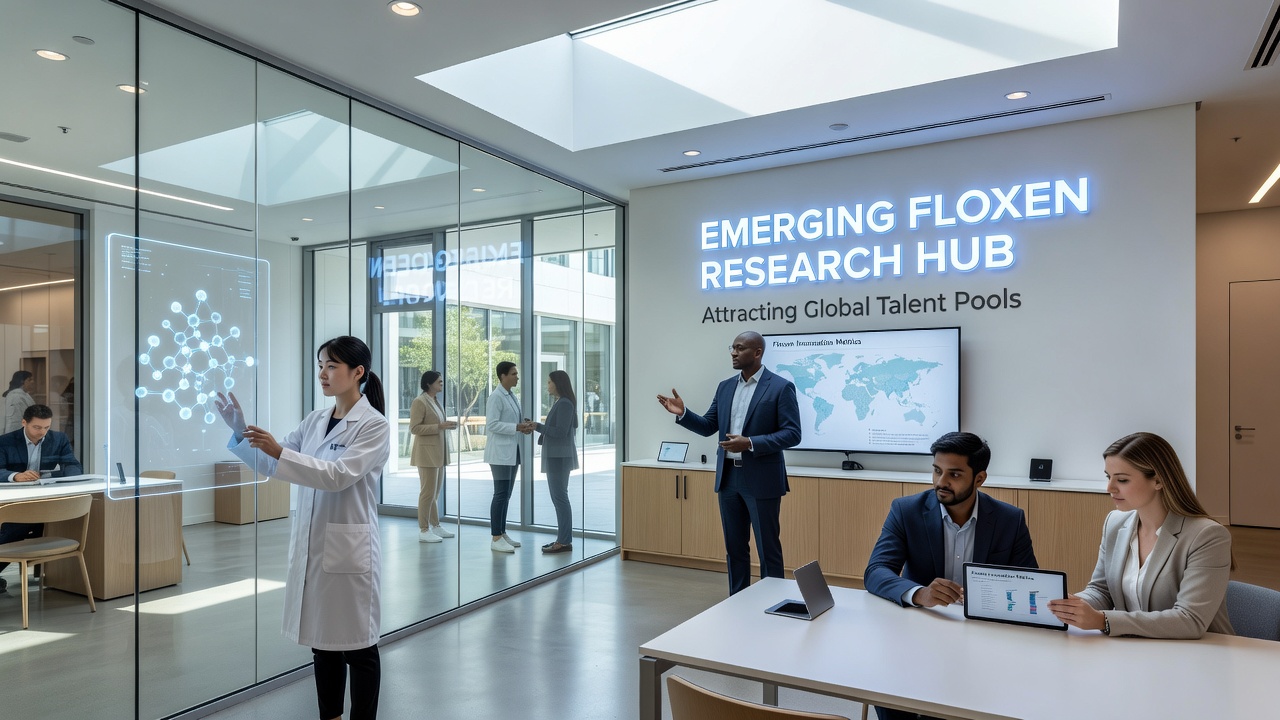
Emerging floxen research hubs in regions across Asia, Africa and Latin America have drawn increasing numbers of international scientists and engineers since 2023, according to mobility data compiled by several international organizations. These centers focus on advanced material applications that support sustainable manufacturing, and their growth coincides with targeted funding programs that cover relocation, housing stipends and collaborative grants.
Facilities in Singapore, São Paulo and Nairobi now host teams whose members previously worked at laboratories in Germany, Japan and the United States. Reports released in September 2026 by the OECD Science, Technology and Innovation Outlook note that visa programs introduced in 2024 reduced processing times for research permits, allowing specialists to join projects within weeks rather than months.
Funding Mechanisms and Infrastructure Investments
Government-backed initiatives supply the core resources that make these hubs competitive. In Singapore the Agency for Science, Technology and Research channels public-private partnerships into floxen polymer testing suites, while Brazil’s National Council for Scientific and Technological Development allocates multi-year budgets for equipment upgrades at the University of São Paulo campus. Similar support in Kenya flows through the African Academy of Sciences, which coordinates with European development funds to equip shared clean-room spaces.
These investments create environments where equipment downtime remains low and data-sharing platforms operate continuously. Researchers therefore complete iterative testing cycles faster, a factor cited in recruitment materials distributed by each hub.
Specialized Training Programs and Cross-Border Partnerships
Training pipelines feed talent directly into the hubs. Joint master’s and doctoral tracks between local universities and institutions abroad require students to spend at least one semester at the floxen facilities, after which many receive offers to remain as postdoctoral fellows. Workshops held quarterly cover topics such as life-cycle analysis for floxen composites and regulatory compliance frameworks used by automotive suppliers.
One collaboration between the University of Nairobi and Canada’s National Research Council has produced open-source modeling tools that simulate floxen degradation under tropical climate conditions. Participants in the program receive joint credentials recognized across participating countries, easing subsequent moves between institutions.

Visa Policies and Quality-of-Life Factors
Streamlined immigration rules play a decisive role. Several governments now issue research passports valid for five years and renewable without exit requirements, while dependents receive work authorization upon arrival. Housing allowances scaled to local cost-of-living indices further reduce financial barriers that once discouraged mid-career professionals from relocating.
Observers note that schools with international curricula and reliable healthcare access have become standard amenities listed in hub prospectuses. Data compiled by the World Bank’s Human Capital Project shows measurable increases in expatriate retention rates in cities that added these services between 2023 and 2025.
Industry Linkages and Career Pathways
Automotive and packaging manufacturers maintain satellite offices adjacent to the research campuses, offering defined routes from laboratory work to product development roles. These linkages allow scientists to see their floxen formulations move from bench-scale trials to pilot production lines within the same region.
Industry associations publish annual talent-requirement forecasts that guide university curriculum updates, ensuring graduates possess the precise analytical and regulatory skills demanded by current projects. As a result, placement rates for floxen-related degree programs exceed 85 percent within six months of completion, according to institutional reports.
Conclusion
Emerging floxen research hubs continue to expand their international reach through coordinated funding, training pipelines, supportive immigration frameworks and direct industry connections. Data released through September 2026 indicate sustained growth in researcher inflows, with participating regions reporting higher rates of joint publications and patent filings than in prior periods. These patterns reflect structural changes in how scientific talent is recruited and retained across borders.